 WhiteLabelUSV
Platform & integration
Your vessel.
Connected on your terms.
Software modules, control hardware and vessel integration for new USVs and remote retrofits. Choose one layer or combine them.

The architecture
Separate layers. One vessel system.
- 01
Vessel hardware
Your selected sensors and control equipment, including hardware supplied by us or other manufacturers.
- 02
WhiteLabelUSV modules
Use the AIS, GNSS, Radar and Engine & Steering modules needed by your applications.
- 03
Your applications
Your operator station, mission logic, navigation software and customer experience.
Data flows toward your applications. Control commands flow toward propulsion and steering. This is a functional overview; the physical connections depend on the selected hardware and adapters.
Navigator · Chart · NavCam
The next layers of the vessel software architecture.
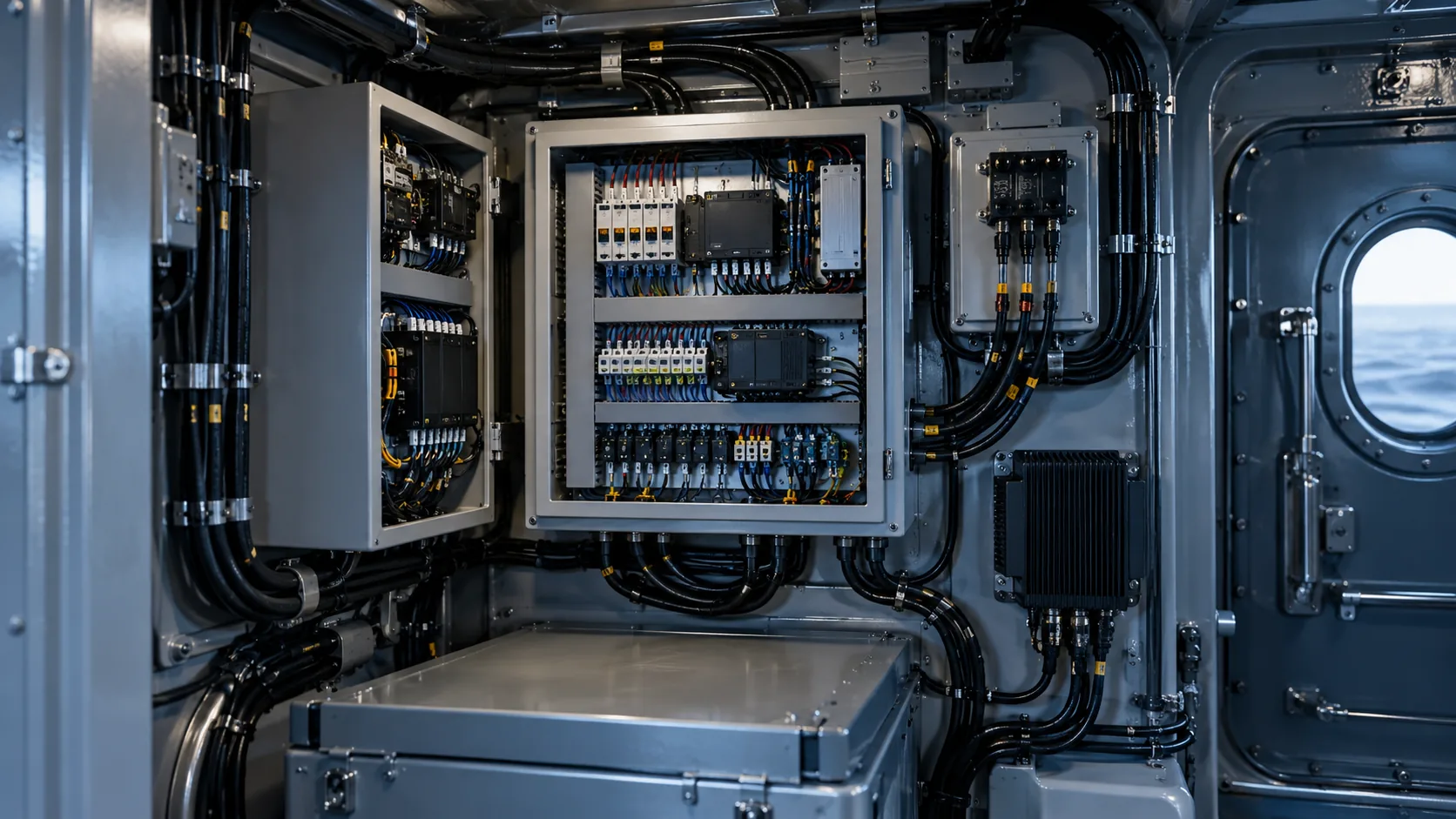
Integration Hardware
H-Bridge and Throttle & Steering hardware. Available separately for compatible control systems.
Operating capability depends on the selected modules, vessel hardware, communications and system integration. Available modules do not constitute a complete autonomous vessel.
Integration planning
Agree the boundaries before connecting the systems.
- You bring
- Vessel context, hardware models, available interfaces, existing software and intended operation.
- We assess together
- Module fit, input and output requirements, adapter scope, evaluation objectives and deployment needs.
- Evaluate
- Review documentation and test representative input, supervision and recovery behaviour.
- Before production
- Agree commercial licensing, integration responsibilities, hardware validation and acceptance criteria.


Build or integrate?
Keep your team focused on the parts that differentiate you.
Compare building internally with integrating a module
| Engineering task | Building internally | Using a module |
|---|---|---|
| Data and command handling | Implement and maintain the full layer. | Evaluate an existing module against your requirements. |
| Supervision behaviour | Design validation and applicable health/recovery behaviour. | Review supplied behaviour and define vessel-level responses. |
| Hardware adaptation | Build device-specific interfaces. | Confirm compatibility and scope any required adapters. |
| Application and brand | Design your own experience. | Retain your application and brand. |
| Vessel validation | Validate the complete system. | Still validate the complete system. |
The amount of engineering avoided depends on the module fit and your existing implementation. Integration does not remove vessel-level engineering or validation.
SIM / REAL behaviour
Test the interface before testing the vessel.
For AIS, GNSS and Engine & Steering, compatible SIM / REAL behaviour supports testing against the module interface before or alongside real inputs and hardware.
Simulation helps exercise software behaviour in a controlled environment. It does not reproduce every sensor, communications or actuation condition at sea.
For Radar, discuss the simulation data and target-integration workflow required by your evaluation.
Integration questions
Before you choose a module.
Can we buy hardware without your software?
Yes. Our control hardware is a separate offering. Tell us about the controller and vessel interfaces you want to use so we can assess the installation.
Must we use the entire stack?
Start by discussing the module needed for your integration. Required dependencies and deployment arrangements are assessed against the selected package and architecture; the website does not assume every module is required.
Which hardware brands are supported?
Compatibility is interface-specific. Send the device model, interface documentation and sample output so support and any adapter work can be assessed.
Can we use our existing autonomy software?
The modules are intended to feed or receive commands from customer applications. Integration depends on matching those applications’ interfaces to the selected module.
What remains our responsibility?
The vessel programme still needs hardware engineering, operating procedures, complete-system validation and clear integration responsibilities. Agree the division of work before production deployment.
Choose your starting point
Start with the layer you need.
Explore the software, choose control hardware, or talk to us about a complete vessel integration.